
Radon is in
your home.
We eliminate it.
Western Massachusetts is one of the highest radon-risk regions in the country. You can't see it, smell it, or taste it — but it's affecting every breath your family takes. Including your pets.
Real installations — Western Massachusetts
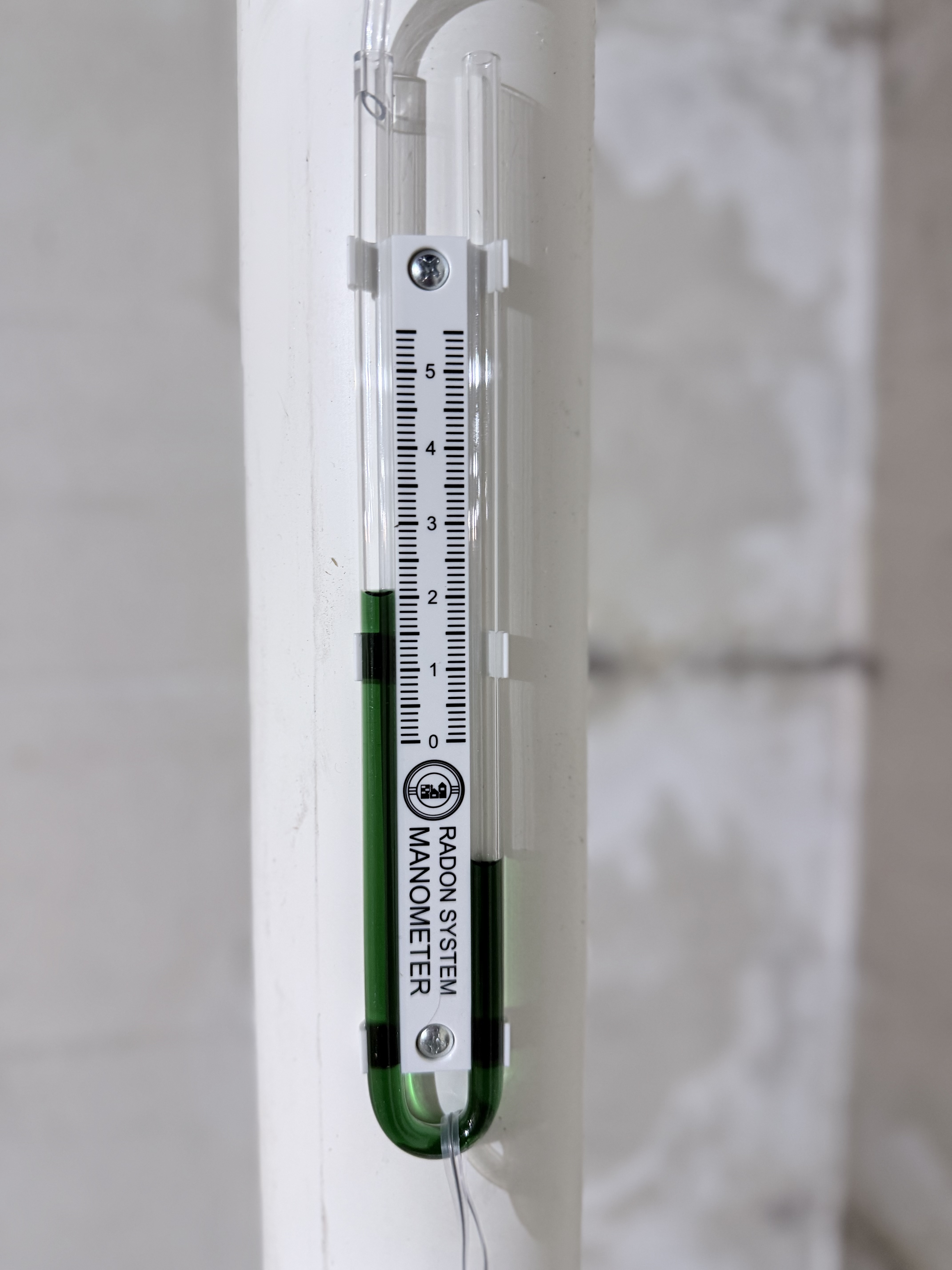
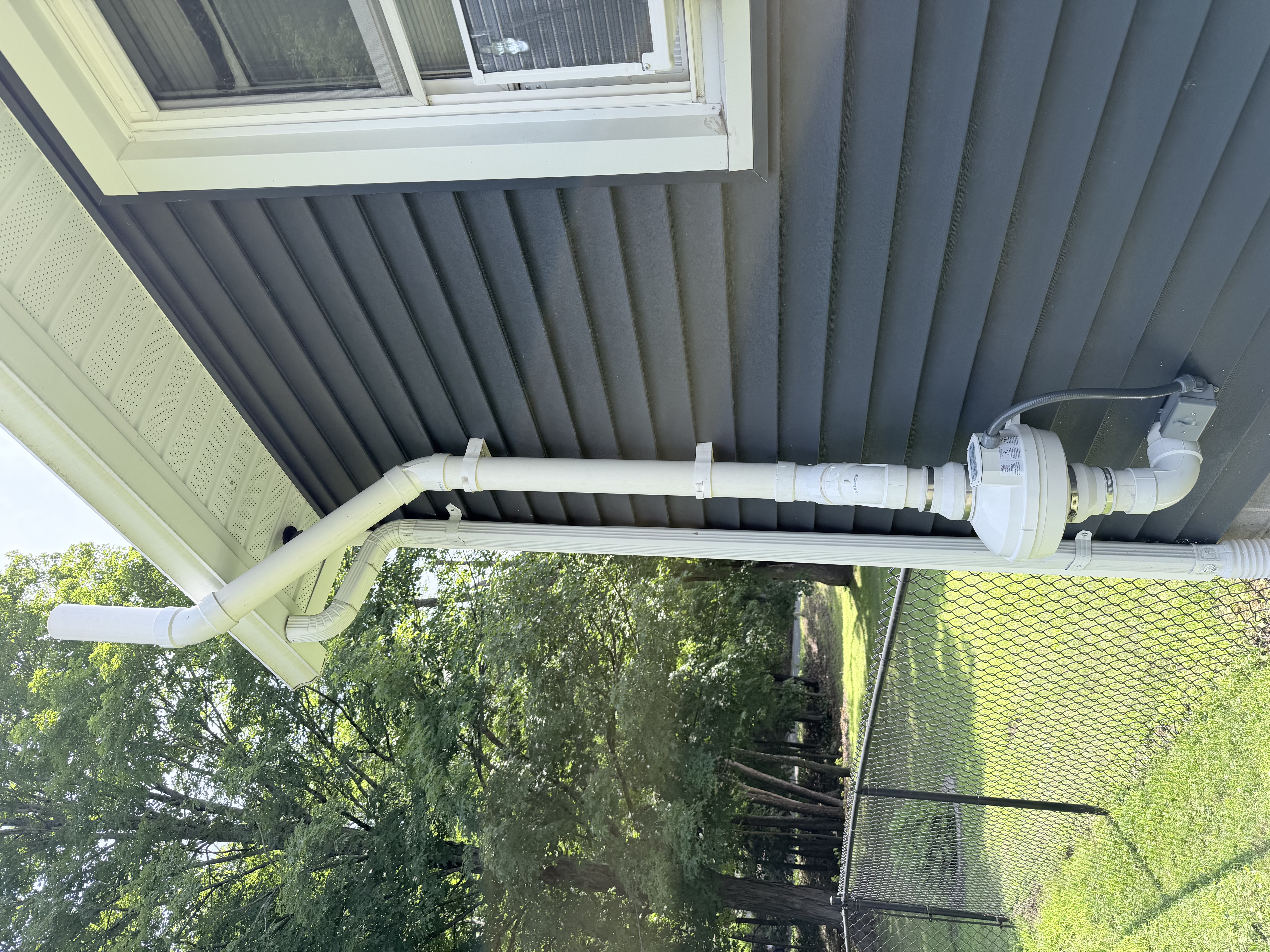
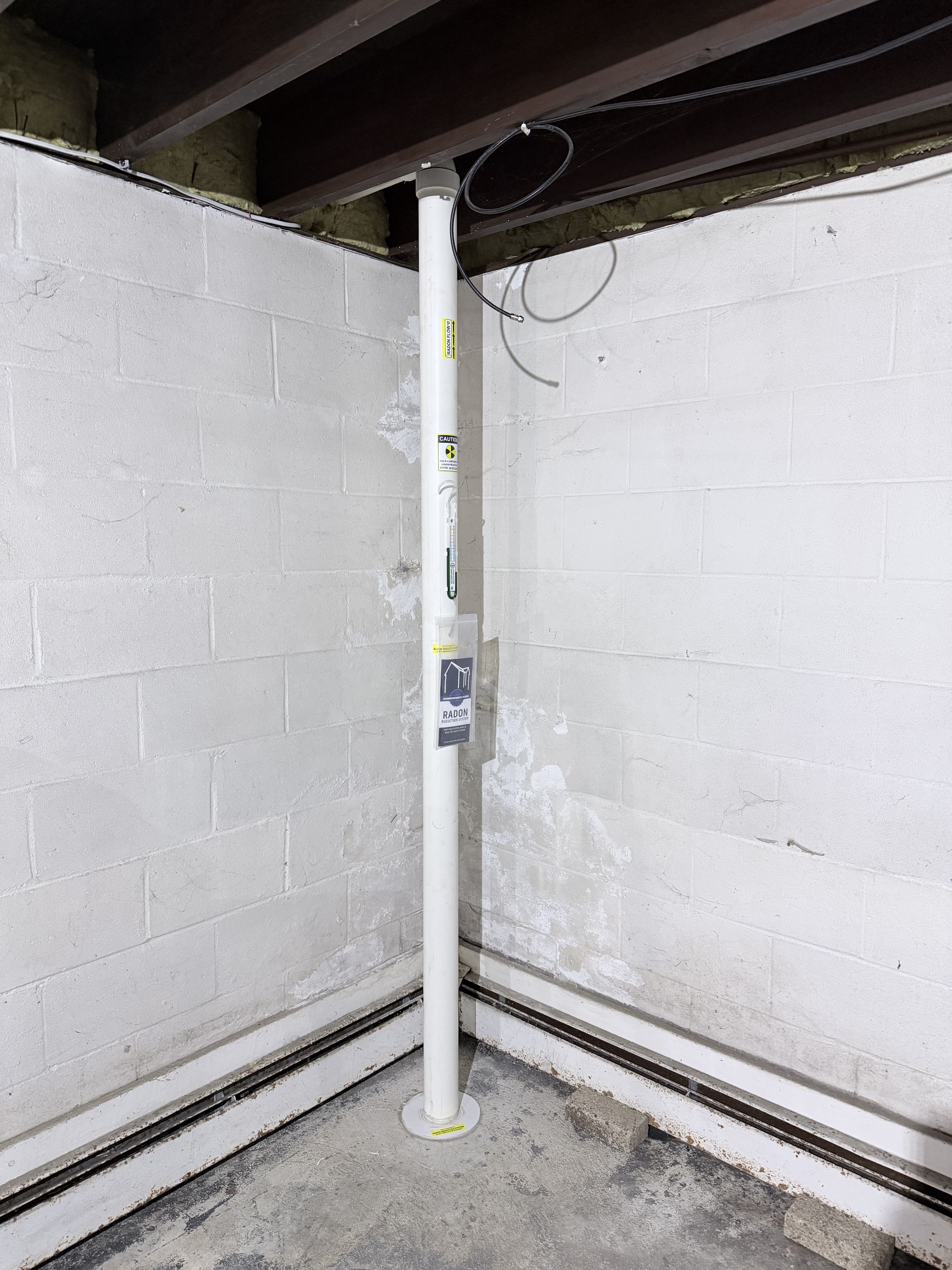
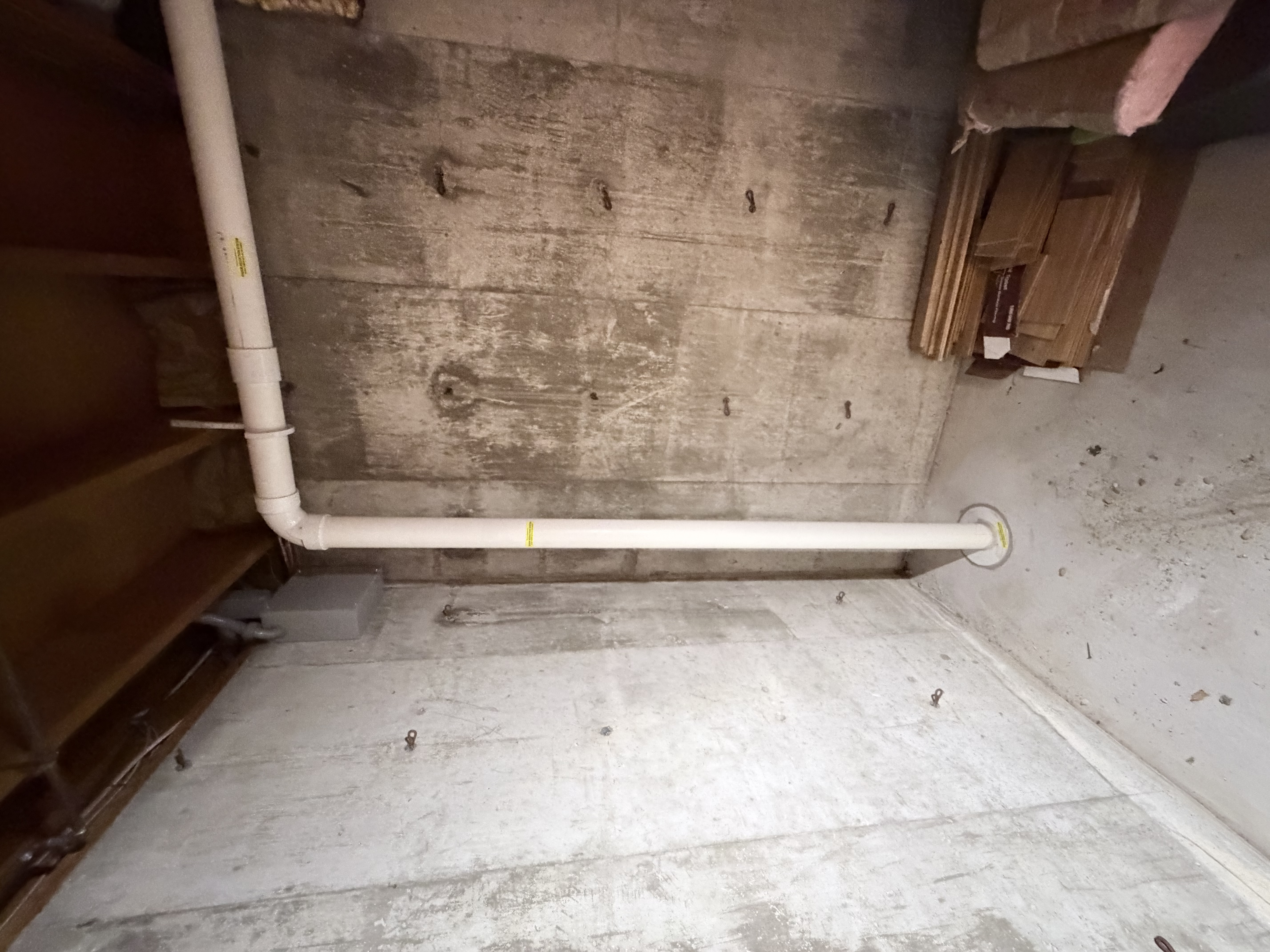
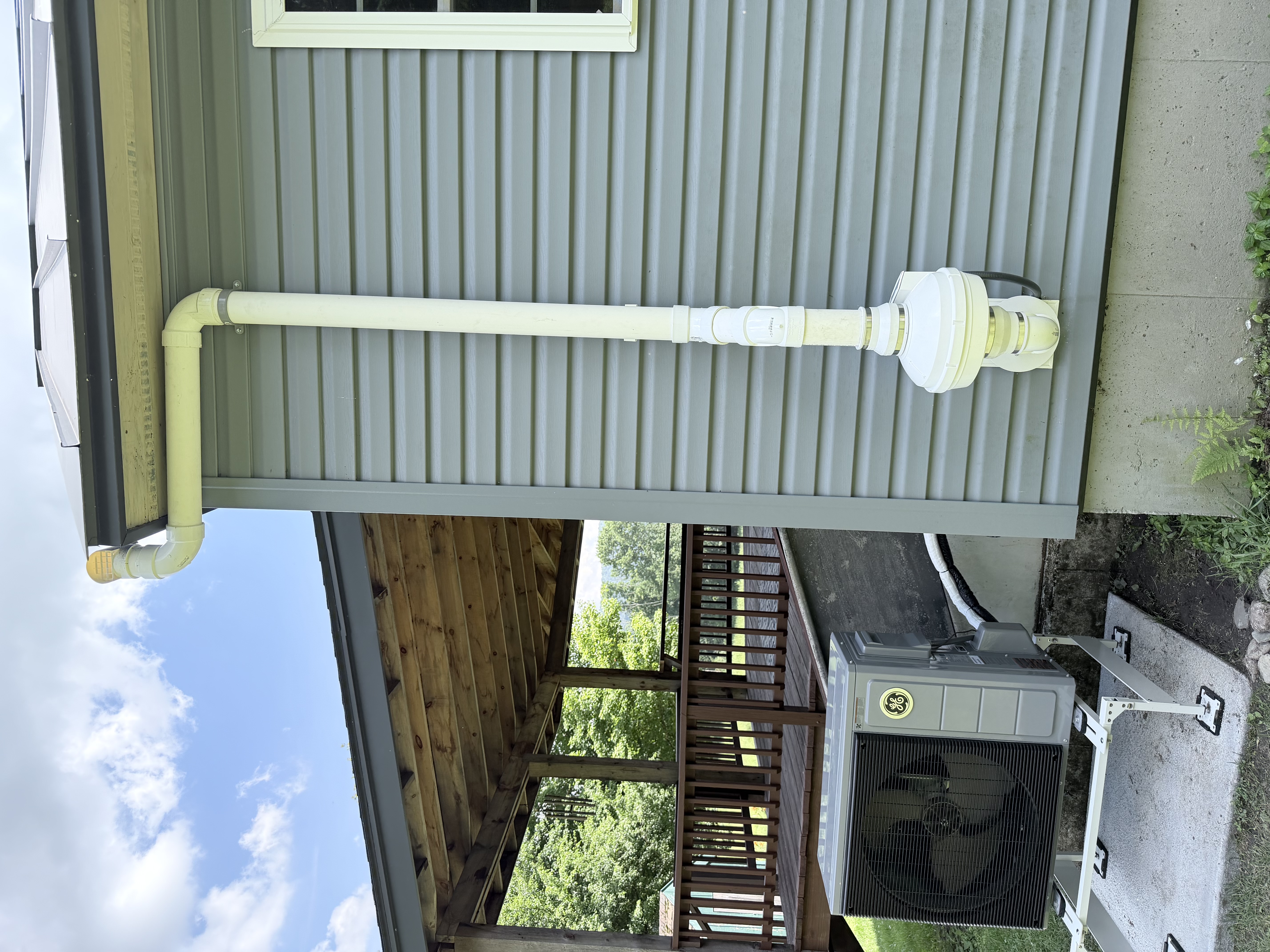
Sub-slab depressurization systems. Festa fans. 5-year warranty on every install.
The numbers the EPA doesn't want you to ignore
Radon isn't a fringe concern. It's a documented, measurable, preventable killer.
Americans killed by radon-caused lung cancer every year
Source: EPA estimateCause of lung cancer in people who have never smoked
Source: EPAUS homes have radon levels above the EPA action threshold of 4 pCi/L
Source: EPAHigher lung cancer risk when radon exposure combines with smoking
Source: Memorial Sloan KetteringInvisible. Odorless. Radioactive.
Radon is a naturally occurring radioactive gas produced by the decay of uranium in soil and rock. It seeps into homes through foundation cracks, construction joints, sump pits, and gaps around pipes — and it concentrates in basements, first floors, and low-lying spaces where families spend most of their time.
The EPA sets the action level at 4.0 pCi/L, but we recommend mitigation starting at 2.6 pCi/L. In Western Massachusetts, we routinely test homes with levels ranging from 2.6 to over 100 pCi/L. There is no “safe” level of radon — only levels where the risk becomes impossible to ignore.
You cannot see, smell, or taste radon
It decays into radioactive particles
Those particles lodge in lung tissue
Over time, they cause cellular damage
That damage leads to lung cancer
Your dog or cat
breathes radon
all day long.
While you're at work, your pets are home — lying on the floor, sleeping in the basement, breathing air you don't think about. Radon is heaviest at ground level. That's exactly where your animals spend most of their time.
A peer-reviewed study published in a veterinary journal found that lung cancer rates in dogs and cats are nearly twice as high in counties with elevated radon levels. Your pet can't tell you their chest hurts. By the time symptoms show, it's often too late.
Research shows dogs and cats living in high-radon areas have approximately double the rate of primary lung tumors compared to pets in low-radon areas.
Dogs and cats spend far more time indoors than their owners — often 20–24 hours a day. That means continuous radon exposure while you're at work, running errands, or living your life.
Radon is denser than air and accumulates at floor level — exactly where pets sleep, play, and breathe. Your pet's nose is often inches from the highest radon concentration in your home.
Radon-related lung tumors in pets develop silently. Coughing, labored breathing, and lethargy appear late. A $15 radon test and a mitigation system can prevent what treatment cannot reverse.
Who faces the highest risk
While radon is dangerous for everyone, certain people face dramatically elevated risk from the same exposure level.
8–9× higher lung cancer risk from radon compared to never-smokers. Radon and tobacco smoke are a dangerous combination — each amplifies the damage of the other.
Developing lungs are more susceptible to radiation damage. Children also breathe more air relative to their body weight, increasing total radon intake.
More hours in the home means more total radon exposure. Remote workers and stay-at-home parents often have the highest cumulative exposure of any household member.
Radon concentrations are highest in basements and lowest floors. Homes with finished basements used as living spaces have significantly elevated risk.
Certain foundation types create direct pathways for radon to enter. Homes with earthen crawlspaces or slab-on-grade foundations are particularly vulnerable.
How radon enters your home
The granite and schist bedrock underlying much of Western Massachusetts releases radon at above-average rates. We consistently test homes in Hampden, Hampshire, and Franklin counties with levels between 2.6 and 100+ pCi/L.
If you haven't tested, assume risk. Testing kits are available at most hardware stores for $15–$30. We offer free site visits for any result above 2.6 pCi/L.
How we permanently fix it
Sub-slab depressurization is the gold standard. Here's exactly how it works.
Tom visits your home to assess foundation type, square footage, radon level, and the best fan and pipe placement. No guesswork — every system is engineered for your specific home.
A dedicated suction pit is created beneath your foundation. PVC piping routes from the pit to a Festa radon fan, which continuously pulls radon-laden air out from the soil.
The pipe exits your home and routes above the roofline, where radon disperses harmlessly into outdoor air. No radon re-enters your living space.
We recommend an independent third-party radon test 24–48 hours after installation to confirm your levels — keeping our no-conflict-of-interest promise intact. We'll walk you through exactly what to do.
How we stand behind our work
Three layers of protection — because your peace of mind shouldn't expire.
Every penetration sealed, every joint secured, every pipe routed to our standard. If any part of our installation workmanship fails within the first year, we come back and fix it. No questions, no charge.
Your Festa radon fan is covered against manufacturer defects for 5 years from installation. Festa fans are made in the USA and built to run continuously — but if a defect occurs, it's covered.
Enroll in our annual maintenance program and extend your fan coverage to 10 years. We inspect the system, check suction levels, clear any blockages, and document everything — so your system keeps performing long after the standard warranty ends.
On post-installation testing
We don't test for radon — that's a deliberate policy that keeps our interests aligned with yours, not with a sale. For your post-installation test, we strongly recommend hiring an independent, certified radon testing professional. They use continuous electronic monitors that produce hourly readings over 48 hours — far more accurate than a passive kit, and the result is an unbiased third-party document you can keep on file.
Certified testers we refer our customers to
Homeowner DIY kits (~$15 at hardware stores) are also an option if you prefer — any independent test is better than none. Professional testing is simply more precise.
To run your radon fan 24/7 — less than $6/month
5 years standard; up to 10 with annual maintenance program
Most installations are done in a single day
Transparent pricing.
No hidden fees. No surprises at end of job. Price confirmed on-site before any work begins.
Sub-slab depressurization for radon entering through foundation and soil. Most homes in Western MA fall in this range.
- Free site visit & assessment
- Festa radon fan (USA-made)
- PVC piping & exterior exhaust
- Post-installation testing
- 5-year warranty
Accel-Aerator E99 point-of-entry aeration system for homes with well water as the radon source.
- Free site visit & assessment
- Aeration or GAC system
- Full installation
- Water testing post-install
- 5-year warranty
- 12-month same-as-cash, 40% down
Annual maintenance program available — extends fan life from 5 to 10 years.
Running your radon fan costs approximately $62/year in electricity. That's the cost of protection for your whole family — including your pets.
Got your radon test results?
Call us today.
If your results are above 2.6 pCi/L, we'll come out for free. Same-week scheduling on most jobs.
Haven't tested yet? Pick up a kit at any hardware store for $15–$30. Then call us.