
Every shower could be
filling your home with radon.
If your home uses well water, radon dissolved in your water supply is released into the air every time you shower, wash dishes, or run a faucet. According to the EPA, showering is the single largest route of radon-from-water exposure — and the bathroom concentrations can spike dramatically in just minutes. We install the Accel-Aerator E99, the most effective point-of-entry radon removal system available, eliminating radon before it ever reaches your plumbing.
How radon gets into your water — and then into your air
Western Massachusetts sits atop granite and metamorphic bedrock that is naturally high in uranium. As uranium decays, it produces radium — and as radium decays, it produces radon gas. Groundwater moving through this geology dissolves that radon, carrying it into aquifers and private wells.
Once radon-laden water enters your home, it behaves like a carbonated drink being opened: any agitation or heat releases the dissolved gas into the surrounding air. Showering, running the dishwasher, washing laundry, boiling water for cooking — every water-use event in your home is a radon release event.
As the EPA states, point-of-entry treatment — treating the water before it enters your home's plumbing — is the most effective solution. It eliminates the problem at the source rather than trying to manage releases room by room.
A 10-minute shower can spike bathroom radon to dangerous levels
Research published in scientific literature shows that showering with radon-contaminated well water in a closed bathroom can cause peak indoor radon concentrations to rise significantly above baseline within minutes. The hot water accelerates radon release, the enclosed space prevents dilution, and the fine mist created by the showerhead maximizes the surface area for off-gassing.
This is why the EPA identifies showering as the primary route of radon-from-water exposure — not drinking the water, but breathing the air produced when that water is used.
EPA guidance: For every 10,000 pCi/L of radon in your water, your indoor air radon level increases by approximately 1 pCi/L. Water radon levels in Western Massachusetts commonly range from 20,000–50,000+ pCi/L — meaning water alone could be adding 2–5+ pCi/L to your indoor air on top of soil gas intrusion.
Two risks. Both serious.
Inhalation — the bigger risk
Radon released from water use is inhaled and deposits radioactive decay products directly in lung tissue. The World Health Organization states that radon causes between 3–14% of all lung cancers globally — responsible for an estimated 84,000 deaths in 2019 alone. The risk increases by approximately 16% for every 100 Bq/m³ increase in long-term radon exposure.
Ingestion — an additional pathway
Drinking water containing dissolved radon exposes stomach and gastrointestinal tissue to radiation. While the EPA considers ingestion a smaller risk than inhalation, it represents an additional cumulative dose — particularly relevant for people who drink primarily from their well, and for pets who drink exclusively from home water sources.
Combined exposure
Homes with both soil gas radon entry and radon-in-water face cumulative exposure from two simultaneous sources. If your air mitigation system is installed and performing correctly but your air radon levels remain elevated, your water supply is likely a contributing factor.
Your dog drinks from a radon-contaminated water bowl every day.
Radon in water is a concern for the whole household — and that includes your pets. Cats and dogs drink exclusively from home water sources, often refilled directly from your well. While humans may drink filtered or bottled water, your pets typically don't have that option.
Beyond ingestion, pets face the same inhalation risks from water-use events that humans do — and research suggests they may be more vulnerable. Studies cited in peer-reviewed literature have found elevated rates of primary pulmonary neoplasia (lung tumors) in dogs and cats exposed to household radon. One analysis found that radon exposure can increase a dog's risk of lung cancer by up to 22%.
The physiological reasons compound the risk: pets breathe faster than humans (dogs take 15–30 breaths per minute at rest versus 12–20 for adults), they spend far more time at floor level where radon concentrates, and they're home all day — maximizing cumulative exposure.
What research shows about pets and radon
Symptoms to watch for in pets: Persistent dry cough, labored breathing at rest, reduced exercise tolerance, unexplained weight loss, lethargy, or wheezing. These are non-specific signs — but if your pet shows them and your water has never been tested for radon, get the test before the next vet visit.
The Accel-Aerator E99 — the only system we install
After evaluating every water radon removal system on the market, this is the only one we stand behind. Here's why.
Built differently from the ground up
The Accel-Aerator E99 is the only radon removal system in its class featuring a Differential Fill Valve — a design specifically developed because existing systems lacked reliability and were difficult to maintain. The manufacturer spent years testing and refining this system until it met a simple standard: built for the end user, not the installer.
No complicated electronics. No failure points.
Unlike competing systems that rely on electronic controls and solenoid valves — components that wear out, fail, and require specialized service — the Accel-Aerator E99 is intentionally simple. No complicated controls. No solenoid valves. Easy to understand, easy to operate, easy to clean. A system this simple has far fewer ways to fail.
Point-of-entry treatment
The EPA's recommended approach for radon-in-water is point-of-entry treatment — treating all water where it enters your home, before it reaches any fixture. The Accel-Aerator E99 is installed on your main supply line, so every drop of water used in your home has been treated. Not just the kitchen tap, not just the drinking water — every shower, every load of laundry, every pet bowl.
How the system works
Real Installations. Local Homes.
Accel-Aerator E99 systems installed by TMS Indoor Air Quality across Western Massachusetts.
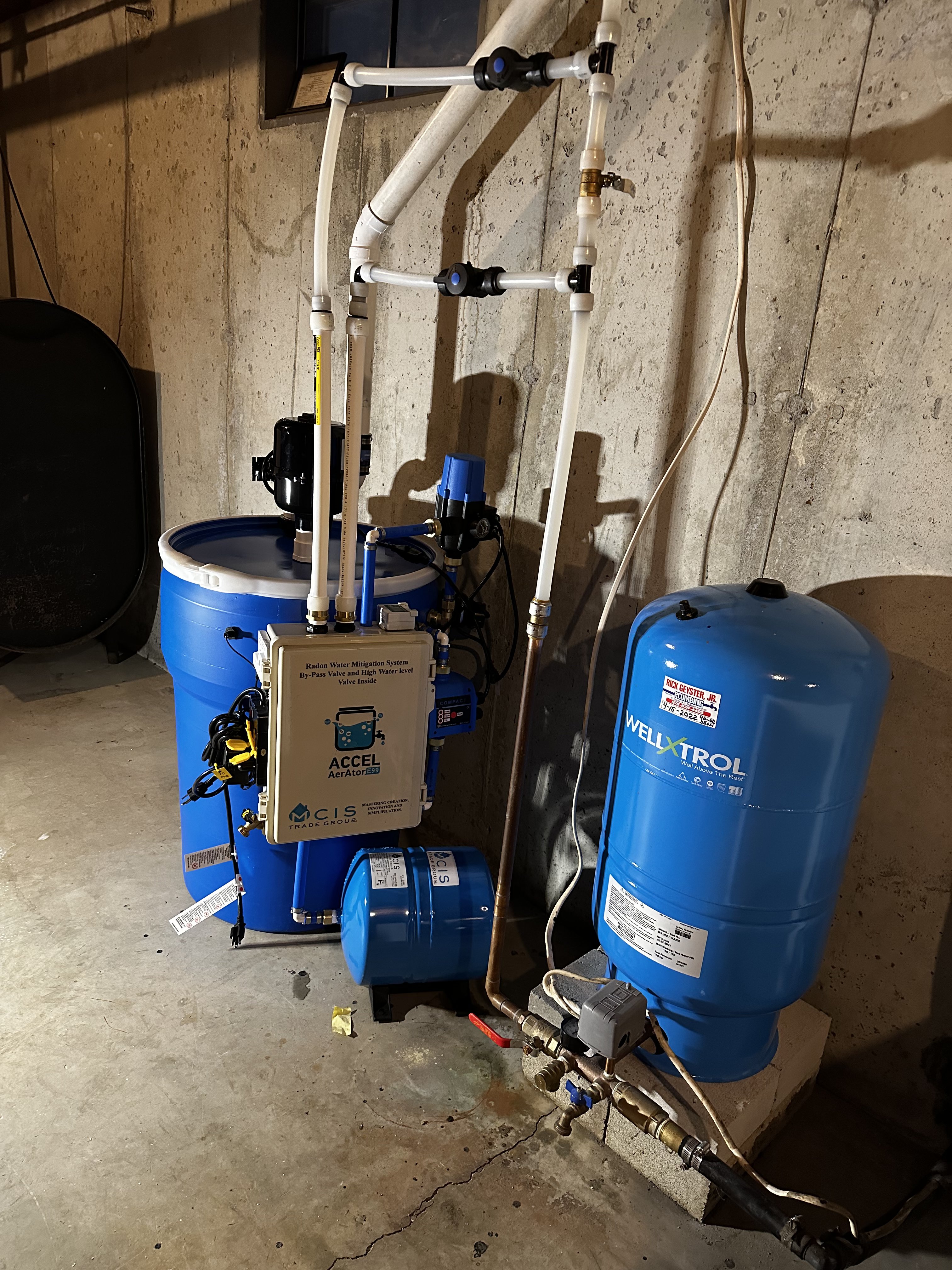
Accel-Aerator E99 installed with Well-X-Trol pressure tank
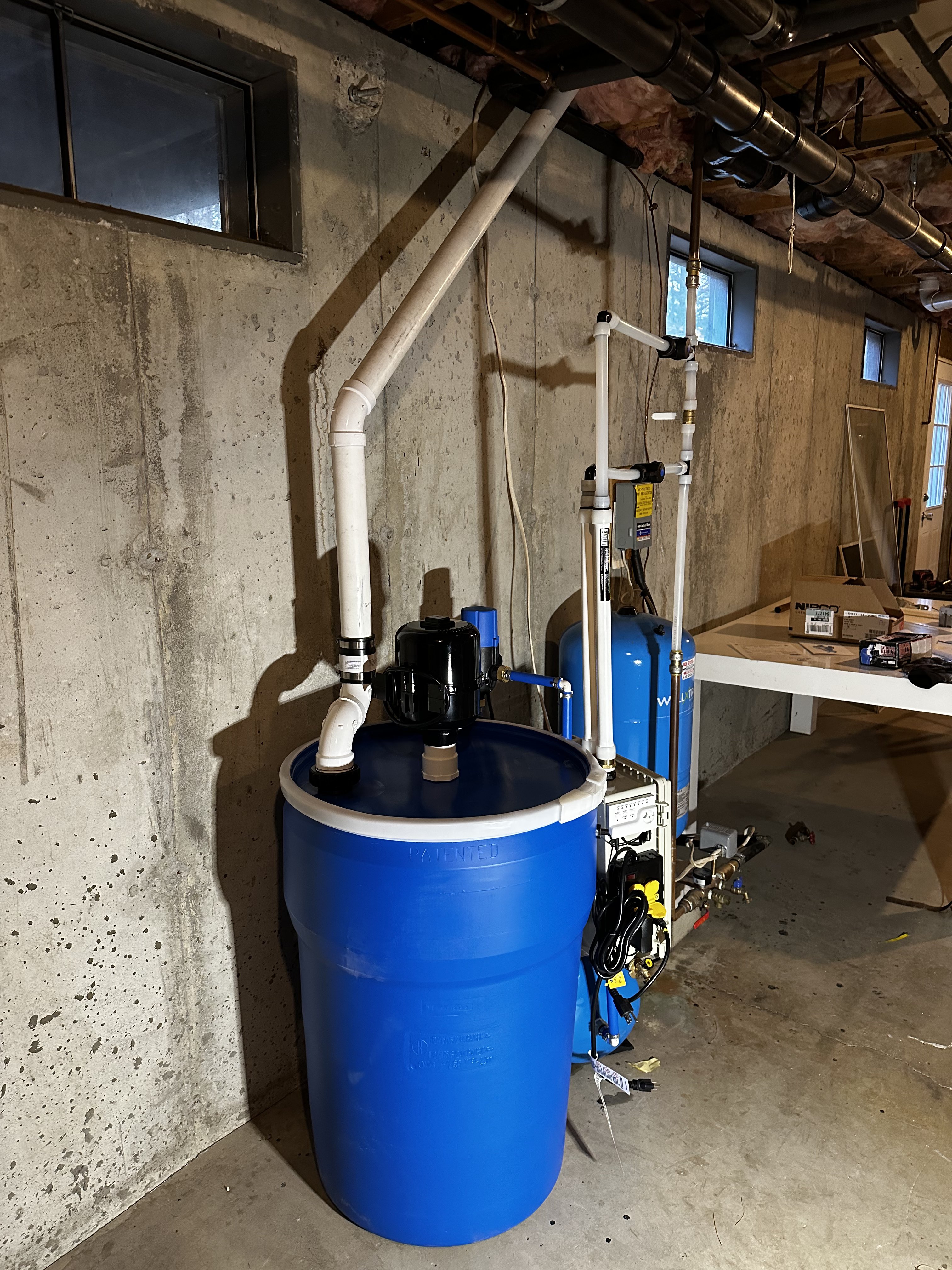
Accel-Aerator E99 with dedicated exhaust venting
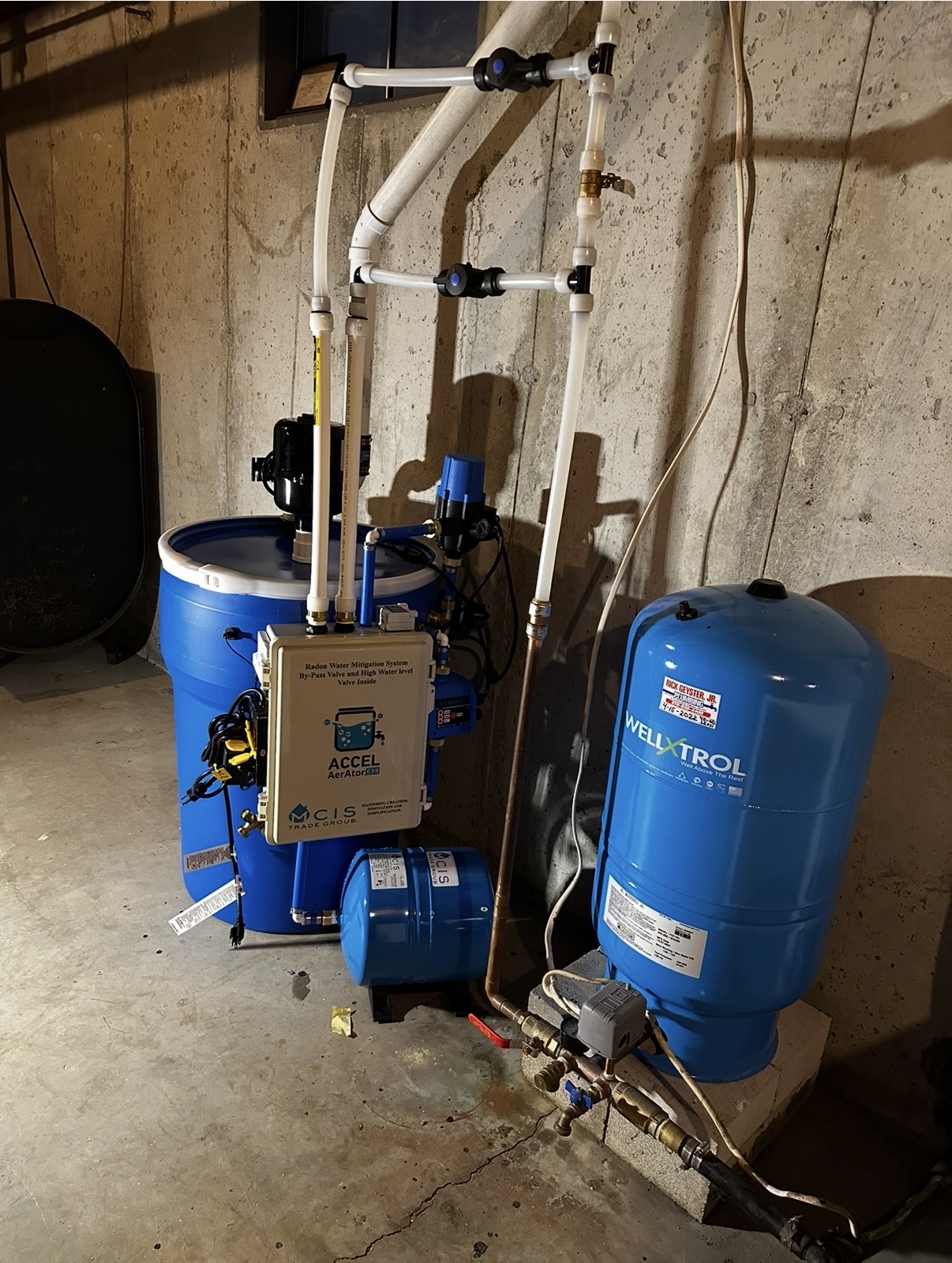
Accel-Aerator E99 drum system with bypass valve assembly
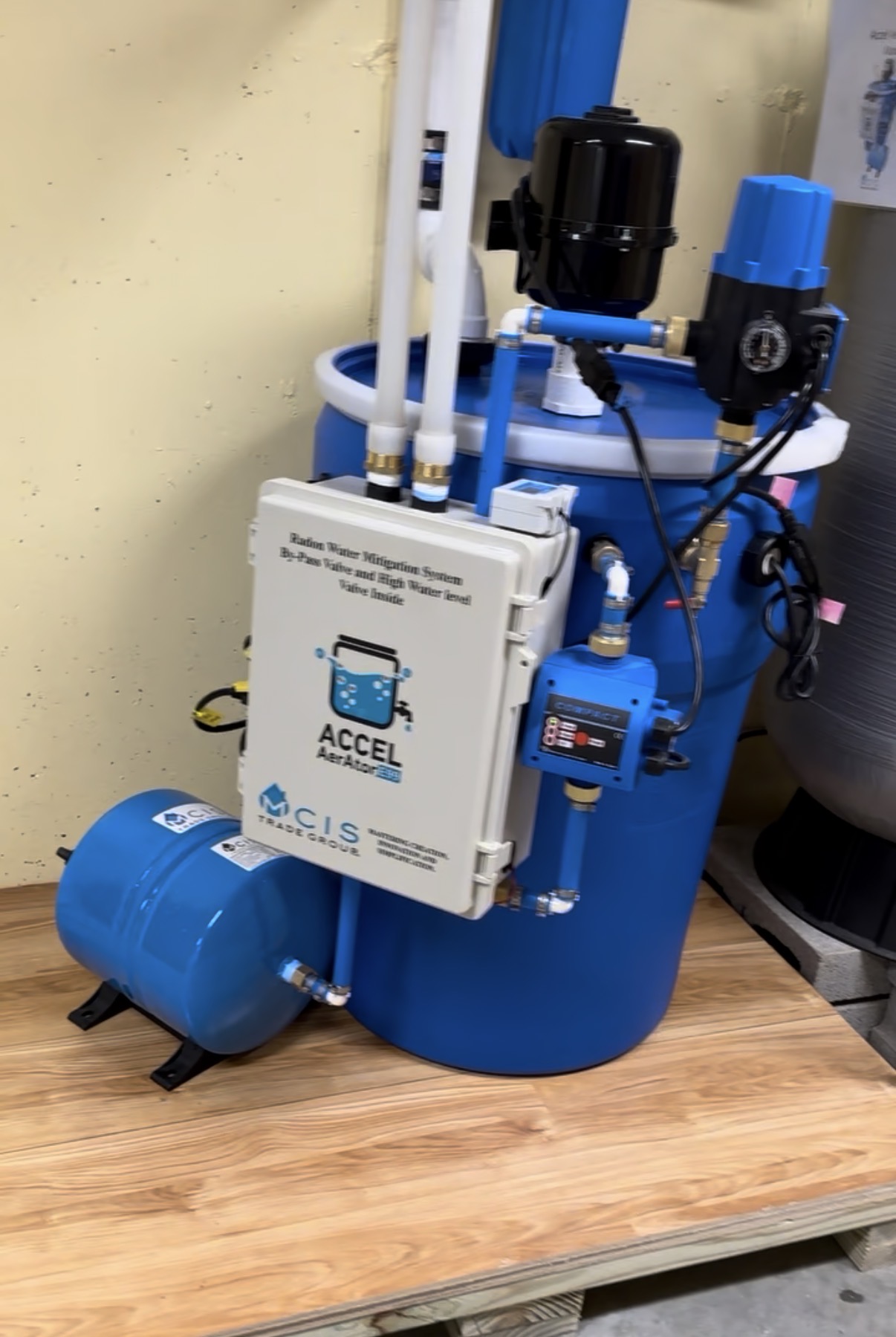
Accel-Aerator E99 complete installation — MCIS Trade Group system
Investment & Warranty
What to Expect
Common Questions
Do I need water mitigation if I already have an air mitigation system?
Yes — they address completely different entry points. Your air mitigation system draws radon from beneath the foundation slab and prevents soil gas from entering through the floor. It does nothing for radon already dissolved in your water supply. If your air system is working correctly but your indoor radon levels remain elevated, water is likely a contributing factor.
How do I know if my well water has radon?
The only way to know is to test. We offer free site visits for homes where testing indicates elevated levels. A water test is separate from an air test — if you've only ever tested the air, you may not have a complete picture of your exposure.
Is this only relevant for well water homes?
Yes. Municipal water systems treat water for radon before distribution. This is only a concern for homes on private well water, which is common throughout Western Massachusetts, Northern Connecticut, and Westerly, Rhode Island.
Will treating my water affect water pressure or quality?
No. The Accel-Aerator E99 is a point-of-entry aeration system — it treats water before it enters your pressure tank and home plumbing. Your water pressure is maintained normally, and the only change to your water is the removal of dissolved radon gas.
Does radon in water affect the taste or smell of the water?
No. Radon is colorless, odorless, and tasteless — in air and in water. There is no sensory way to detect it. Testing is the only reliable method.
Sources: World Health Organization — Radon and Health Fact Sheet; WHO, 2021 Radon Cancer Risk Data; U.S. Environmental Protection Agency — Basic Information About Radon in Drinking Water; EPA Radon in Water Health Risk Guidance; National Institute of Health / NCBI — Health Effects of Radon; peer-reviewed research on radon transfer from groundwater to indoor air during showering; published literature on radon exposure and pulmonary neoplasia in dogs and cats. Accel-Aerator E99 system information courtesy of MCIS (mcis.biz).
Protect your whole family — including the ones with four legs.
Free site visit. Upfront pricing. 26 years protecting families in Western Massachusetts.