According to the U.S. Fire Administration, dryers cause approximately 2,900 house fires per year — and the leading cause is failure to clean them. But that figure only captures reported fires. Thousands more incidents go unreported, and many more homes are quietly accumulating the conditions for a fire without their owners ever knowing.
Dryer vent cleaning isn't glamorous. It's not something most people think about. But after 28 years of cleaning vents in Western Massachusetts and beyond, we've seen what a neglected vent looks like — and we've seen the aftermath when one catches.
How Dryer Vent Fires Start
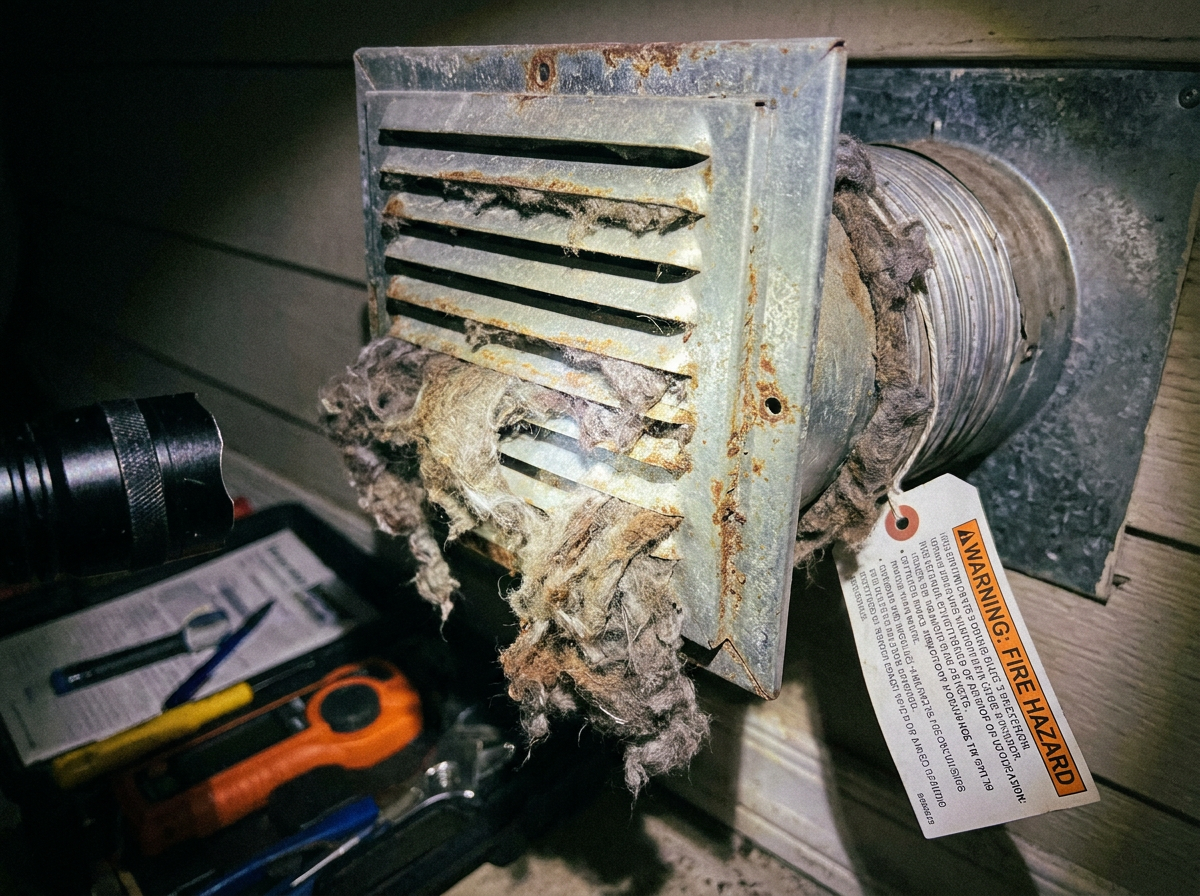
Every time your dryer runs, it produces lint — fine, highly flammable fibers shed from your clothes. The lint trap catches some of it, but a significant amount bypasses the trap and collects inside the vent duct. Over time, that buildup restricts airflow. Restricted airflow means your dryer runs hotter. And eventually, the combination of heat and accumulated lint creates the conditions for ignition.
Lint ignites at around 400°F. Dryer exhaust can reach 135°F under normal conditions — but with a blocked vent, temperatures inside the duct can climb dramatically higher.
5 Signs Your Vent Needs Cleaning
1. Clothes are taking longer to dry. This is the most common symptom. If a load that used to dry in 45 minutes is now taking 70 or 80, your vent is restricting airflow. The dryer isn't broken — it can't exhaust properly.
2. The dryer is hot to the touch after a cycle. Your dryer should be warm, not hot. If the top or sides of the machine feel uncomfortably warm after a normal cycle, that heat is not escaping properly through the vent.
3. You can smell something burning. Any burning smell from your laundry room — even faint — warrants an immediate stop and inspection. Lint doesn't need to be on fire to smell like it's burning.
4. The exterior vent flap isn't opening during operation. Go outside while your dryer is running and check the vent cap. You should see the flap open and feel a strong airflow. Little to no airflow means a blockage exists somewhere in the duct.
5. It's been more than a year since your last cleaning. Even if you're not seeing obvious symptoms, most homes should have their dryer vents professionally cleaned annually. High-use households (families with children, frequent laundry) may need it every 6 months.
What Professional Cleaning Involves
A professional dryer vent cleaning isn't just running a brush through the duct. We use specialty air whips and rotary brushes designed to break up compacted lint throughout the entire duct run — including bends, elbows, and the section immediately behind the dryer that homeowners almost never clean.
We also inspect the duct itself for damage, improper materials (flexible plastic duct is a fire code violation in most jurisdictions), excessive length, and improper pitch. If we find problems, we document them and give you options — no pressure, no upselling.
The service takes about an hour and costs $195. It comes with a 90-day warranty. We respond to emergency calls within 24 hours when your dryer isn't drying and you need it working today.
One More Thing: Birds and Animals
In Western Massachusetts, it's not uncommon to find birds or small animals nesting in exterior vent caps, particularly in spring. A nest in your vent cap creates a complete blockage and is a serious fire risk. If your dryer suddenly stopped exhausting properly after winter, this is often why.
Don't Wait for Something to Go Wrong
Dryer vent cleaning is one of the most overlooked home maintenance tasks — and one of the most consequential when it's skipped. Schedule a cleaning once a year, watch for the signs above, and don't ignore a dryer that's working harder than it should be.