Radon is a colorless, odorless, radioactive gas that forms naturally as uranium in soil and rock breaks down. It seeps up through the ground and into homes through foundation cracks, floor drains, and gaps around pipes. Once inside, it accumulates — and at high enough levels, it becomes the second leading cause of lung cancer in the United States, responsible for roughly 21,000 deaths per year.
If you live in Western Massachusetts, this isn't a distant risk. It's a real one.
The Numbers You Need to Know
Radon is measured in picocuries per liter of air (pCi/L). Here's how the EPA categorizes risk levels:
- Below 2 pCi/L: Low risk. No action required, though the EPA notes there is no completely safe level.
- 2–4 pCi/L: Moderate. The EPA recommends considering mitigation.
- 4 pCi/L and above: The EPA action level. Mitigation is strongly recommended.
The national average indoor radon level is around 1.3 pCi/L. In Western Massachusetts, we routinely see homes testing between 2.6 and 100 pCi/L. That upper end isn't a typo. We've measured it in homes that looked and felt completely normal.
Why Western Massachusetts Has High Radon
The geology of our region is a significant factor. Much of Western Massachusetts sits atop granite and metamorphic rock formations that are naturally high in uranium and radium — the parent materials that produce radon gas. As that gas migrates upward through soil and rock, it finds its way into basements and crawlspaces, particularly during winter when homes are sealed tight and the pressure difference between inside and outside draws air up through the foundation.
Older homes with stone foundations, exposed soil in crawlspaces, or unfinished basement floors tend to show higher readings. But even newer construction isn't immune — radon can enter through any gap in the foundation envelope.
Testing: The Only Way to Know
You cannot smell, see, or taste radon. Testing is the only way to know your home's levels. There are two main options:
- Short-term test (2–7 days): A charcoal canister placed in the lowest livable level of your home. Good for a quick read, though results can vary based on weather and seasonal conditions.
- Long-term test (90+ days): A more accurate picture of year-round average exposure. Generally preferred when making mitigation decisions.
If your test comes back above 2.6 pCi/L, we offer a free site visit to assess your home and recommend the right mitigation approach. There's no cost and no obligation — just answers.
What Radon Mitigation Actually Involves
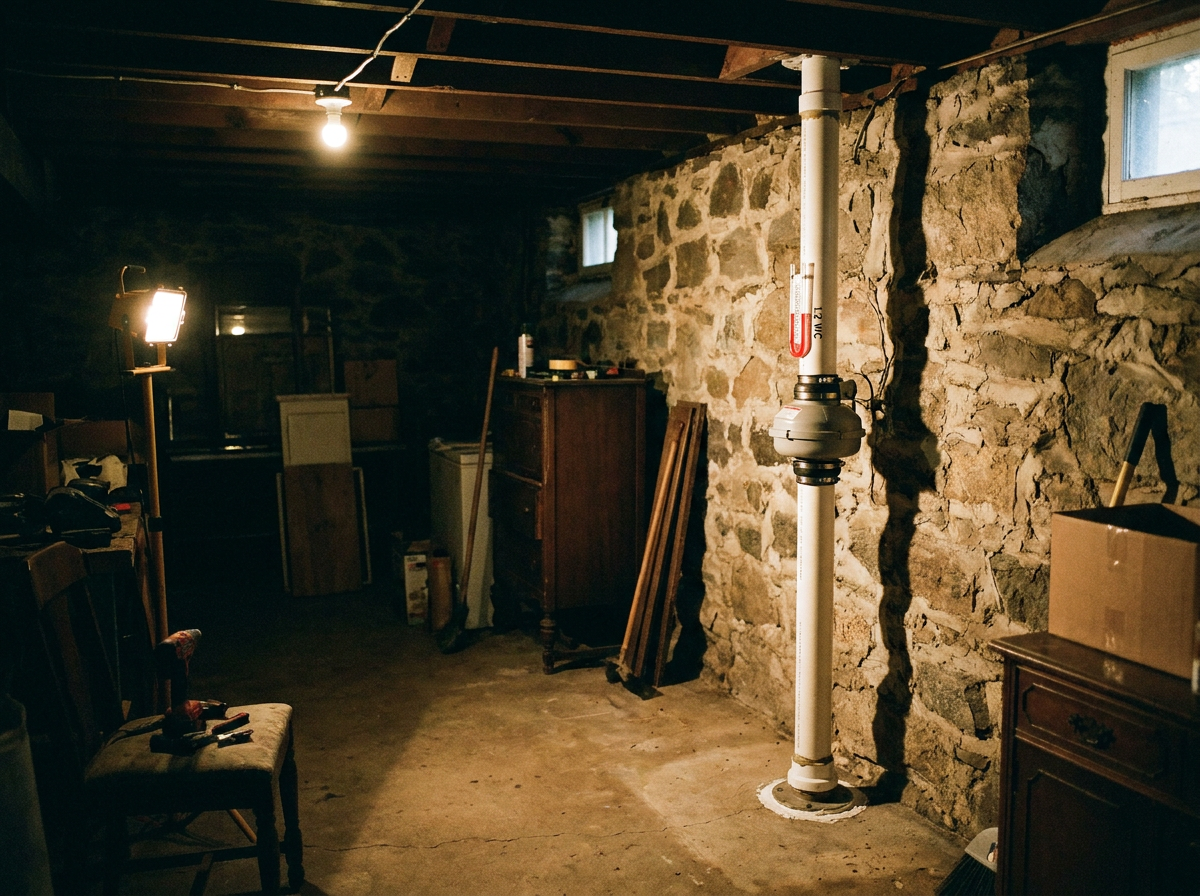
A properly installed radon mitigation system isn't complicated, but it needs to be done right. The most common approach is sub-slab depressurization: a PVC pipe is inserted through the foundation floor and connected to a continuously running fan. The fan creates negative pressure beneath the slab, drawing radon gas out before it can enter the living space and venting it safely outside above the roofline.
A properly installed system will reduce radon levels by 90% or more in most homes. Installation typically takes 4–5 hours and causes minimal disruption to your home. We use Festa radon fans — made in the USA — sized specifically to your home's square footage, foundation type, and radon levels.
Our systems carry a 5-year warranty. Annual energy cost to run the fan is roughly $62. For context, that's about $5 a month to protect your family from the second leading cause of lung cancer.
What Happens After Installation
We test radon levels after installation to confirm the system is working. If levels aren't where they need to be, we adjust — no extra charge. Most homeowners see readings drop below 2 pCi/L within 24 hours of system activation.
Over time, fan motors can wear. We offer an annual maintenance program that extends fan life to approximately 10 years and keeps your system performing at spec.
The Bottom Line
If you haven't tested your home for radon, do it. If you've tested and your levels are above 2.6 pCi/L, call us. This is one of the most cost-effective investments you can make in your family's long-term health.
We've been doing this since 1998. We know the geology in Western Massachusetts, we know what works, and we stand behind every system we install.