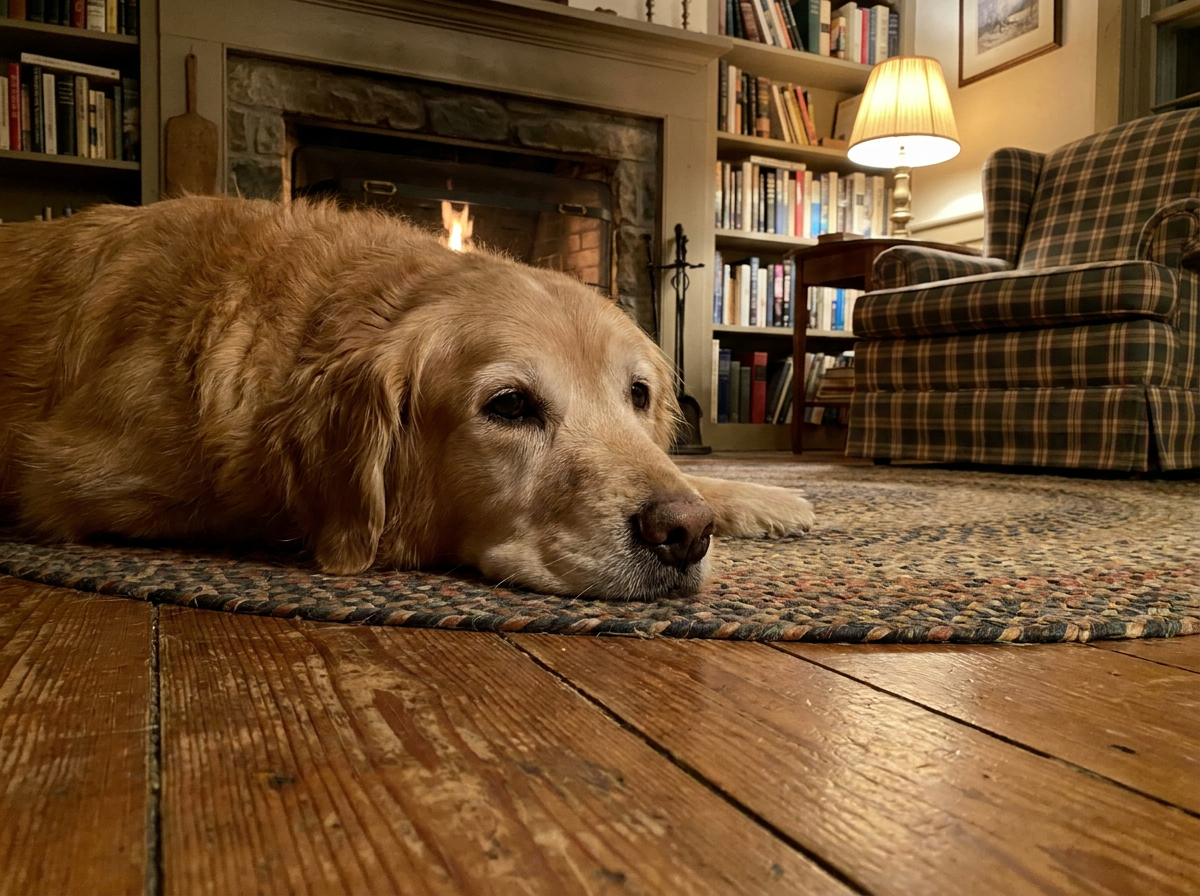
Picture your dog's day. He wakes up on his bed in the corner of the bedroom — maybe six inches off the floor. He spends the morning on the kitchen tile while you make coffee. He naps in the living room, nose down, belly flat, pressed against the carpet for hours. When you're at work, he sleeps in the basement where it's cool and quiet.
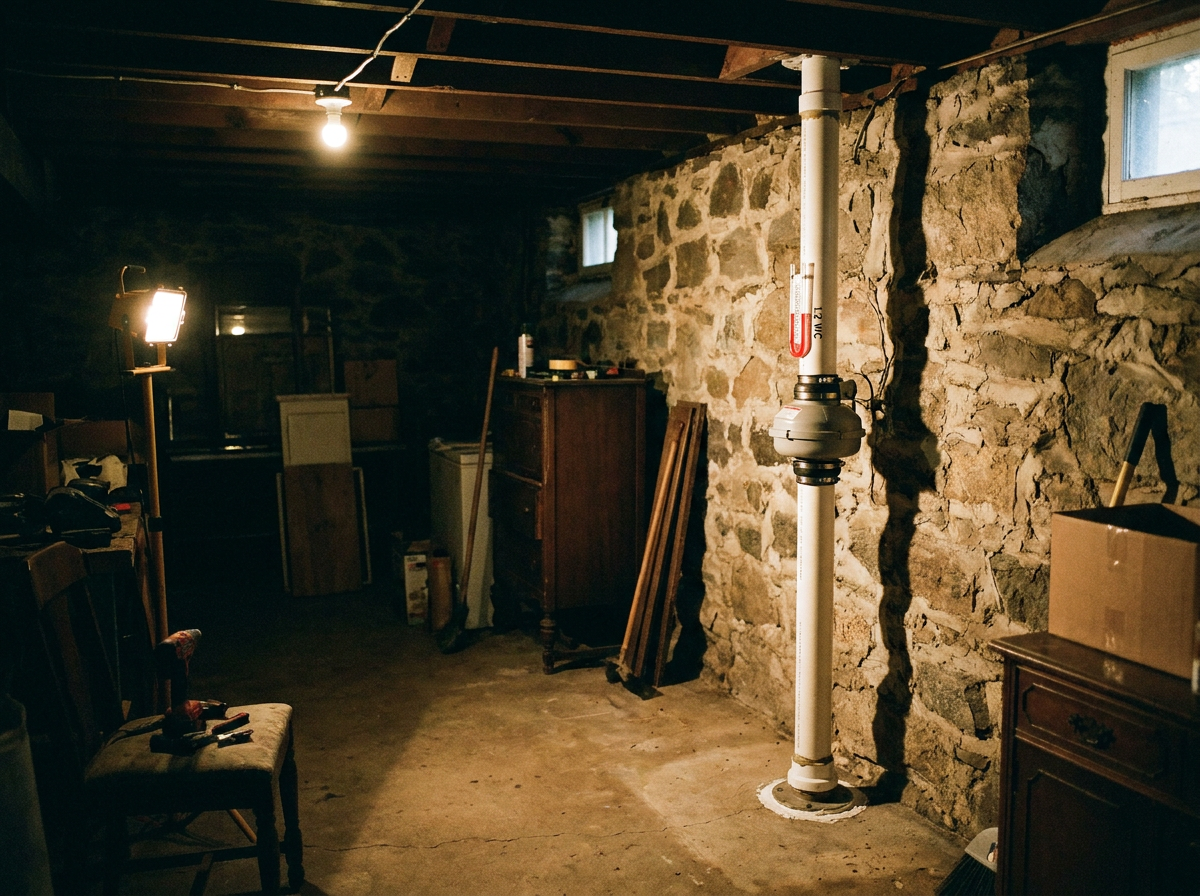
Now picture where radon collects. Radon is heavier than air. It seeps up from the soil, enters through the foundation, and settles at the lowest points in your home — the basement, the crawlspace, and the air right above the floor on every level above it.
Your dog lives his entire life in that layer.
The Science Behind the Risk
Radon exposure is measured by how much radioactive gas enters the lungs over time. The more air you breathe, and the longer you breathe contaminated air, the greater your cumulative exposure. On both counts, your pets are at a significant disadvantage.
They breathe faster. A resting dog takes 15–30 breaths per minute. A resting human takes 12–20. Cats breathe even faster — up to 30 breaths per minute at rest. More breaths per minute means more radon-laden air passing through lung tissue every hour of every day.
They live at floor level. Radon concentration is measurably higher at floor level than at standing height. The EPA measures radon at roughly three feet above the floor — breathing height for an adult. Your dog's nose is about six inches off the ground. The difference in radon concentration between those two heights in a home with elevated levels isn't trivial.
They spend more time home. The average adult spends a significant portion of their day outside the home — at work, running errands, commuting. Your pets are home all day, often in the lowest levels of the house, breathing continuously.
What the Research Shows
The connection between radon and lung cancer in humans is well-established — radon is the second leading cause of lung cancer in the United States, responsible for an estimated 21,000 deaths per year. The research on pets is less extensive, but what exists is concerning.
Studies have found that dogs living in homes with high radon levels have elevated rates of lung cancer compared to dogs in low-radon homes. This mirrors the dose-response relationship seen in humans: more exposure, greater risk. Dogs are actually useful research subjects for radon studies precisely because they share our living environment so completely — they eat, sleep, and breathe in the same spaces we do, often for their entire lives.
Cats, while studied less extensively, face the same physiological exposure factors and are presumed to carry similar risks.
Symptoms to Watch For
Radon-related lung damage develops slowly and silently — in pets just as in humans. There's no acute reaction, no immediate sign that something is wrong. By the time symptoms appear, significant damage has typically already occurred.
Signs of respiratory distress or lung problems in dogs and cats include:
- Persistent cough that doesn't resolve, especially a dry or hacking cough
- Labored or rapid breathing at rest
- Reduced exercise tolerance — tiring more quickly than usual
- Unexplained weight loss
- Lethargy or decreased energy over time
- Wheezing or unusual breathing sounds
None of these symptoms are specific to radon exposure — they can indicate many conditions. But if your pet is showing any of them and you've never tested your home for radon, that test should happen before the next vet visit, not after.
What You Can Do
Test your home. A radon test is inexpensive, non-invasive, and takes 48–96 hours. It's the only way to know what levels you and your pets are actually being exposed to. If you live in Western Massachusetts, Northern Connecticut, or Westerly, Rhode Island, the geology in our region means elevated radon is common — not exceptional.
Take action if levels are above 2.6 pCi/L. The EPA's official action level is 4 pCi/L, but we recommend considering mitigation at 2.6 pCi/L — especially in homes with pets or children who have higher cumulative exposure. At that level, a properly installed mitigation system can reduce concentrations by 90% or more.
Pay attention to where your pets spend time. If your dog sleeps in the basement, that matters. The lowest level of your home is where radon concentrates most heavily. A dog who spends eight hours a day sleeping in the basement of a home with elevated radon is accumulating a significant dose over the course of a year.
They Can't Tell You Something Is Wrong
That's the part that should sit with you. A person experiencing early symptoms of radon-related lung damage can describe what they're feeling — shortness of breath, a persistent cough, something that doesn't feel right. They can seek medical attention early. They can make the connection.
Your dog can't do any of that. He just breathes. Day after day, nose to the ground, trusting that the home you've built for him is safe.
Testing your home for radon is one of the simplest things you can do for his health. If you haven't done it, we offer free site visits for homes in our service area where levels are above 2.6 pCi/L. No sales pressure — just information, so you can make an informed decision for your whole family. Including the ones with four legs.