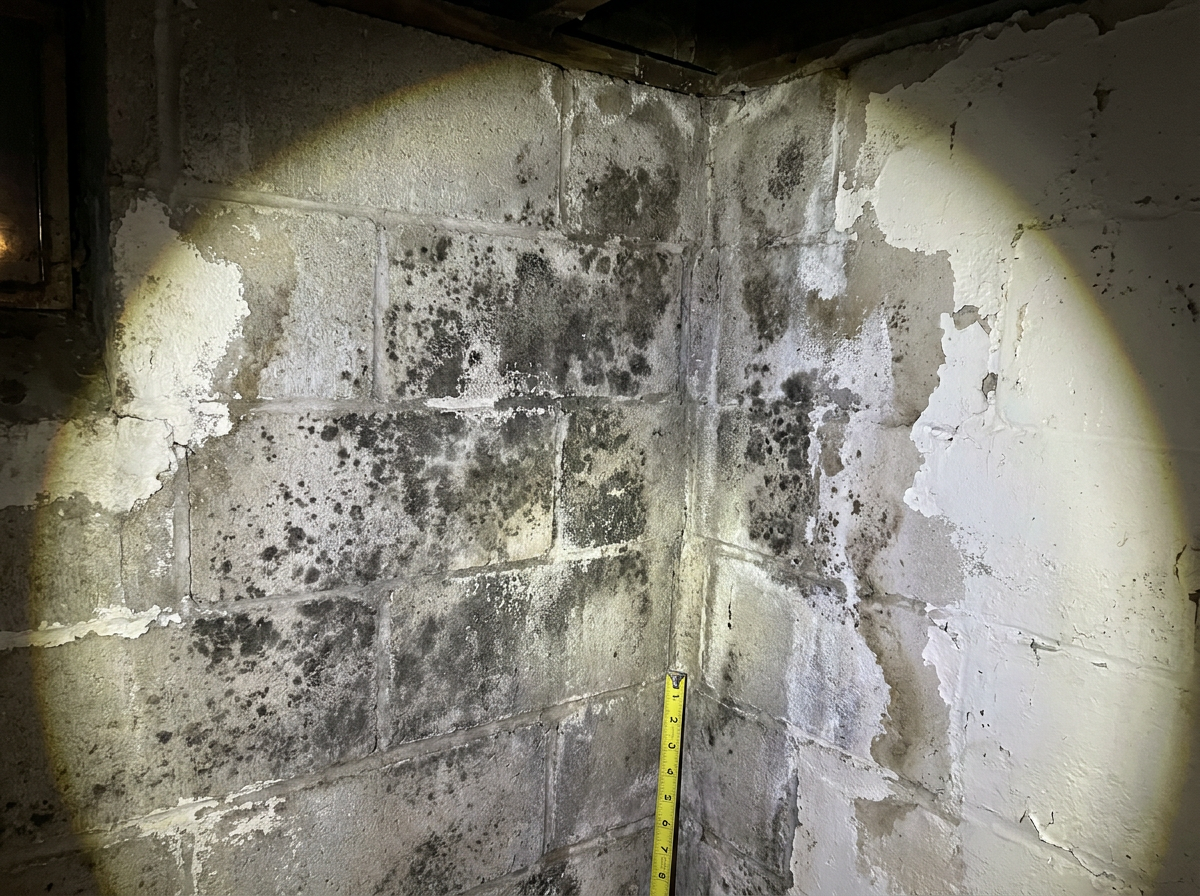
Mold is one of those things that homeowners either minimize ("it's just a little mold") or catastrophize ("our house is toxic and we need to move out"). The reality is somewhere in between — and understanding it clearly will help you make better decisions for your family.
The short version: mold is a legitimate health concern that should be addressed promptly and properly. It should not be ignored, and it should not be handled with bleach spray and wishful thinking.
What Mold Actually Is
Mold is a fungus. It reproduces by releasing tiny spores into the air — spores that are present everywhere, indoors and outdoors, all the time. The problem isn't spores in the air; it's when spores land on a surface with adequate moisture and organic material, and begin growing into a colony.
In homes, mold grows on wood framing, drywall, insulation, ceiling tiles, carpet, and anywhere else it finds moisture and something to eat. The most common trigger is a moisture problem — a leak, condensation, flooding, or a persistently humid environment like an unencapsulated crawlspace.
Health Effects: What the Research Actually Says
Not all mold is created equal, and not all people react to mold the same way. That said, mold exposure is linked to a consistent set of health issues:
- Respiratory symptoms: coughing, wheezing, shortness of breath
- Nasal and sinus congestion
- Eye, throat, and skin irritation
- Worsening of asthma and allergies
- In people with compromised immune systems: more serious infections
Children, the elderly, and people with existing respiratory conditions are most vulnerable. But even healthy adults can develop symptoms with prolonged exposure to elevated mold levels.
If household members are experiencing unexplained respiratory issues, chronic fatigue, or allergy-like symptoms that improve when they leave the house, mold is worth investigating.
What Not to Do
Don't use bleach. Bleach kills surface mold temporarily, but it doesn't penetrate porous materials like wood or drywall where mold roots (hyphae) live. Within weeks, the mold returns. Bleach also releases fumes that can irritate airways, and it doesn't address the underlying moisture problem.
Don't ignore it. Small mold patches can expand rapidly under the right conditions. What looks like a minor issue on the surface can hide extensive growth behind walls, under flooring, or inside wall cavities.
Don't disturb it without containment. Scrubbing or cleaning mold without proper containment releases enormous quantities of spores into the air, potentially spreading the problem to areas that were previously clean.
Don't skip finding the source. Removing mold without fixing the moisture problem that caused it is a temporary fix. The mold will return.
What Professional Remediation Involves
Effective mold remediation follows a defined process. At TMS Indoor Air Quality, we use DOT technology — Dilute Oxidation Technology — which treats mold at the molecular level rather than just killing surface growth.
The process involves:
- Assessment: Identifying the full extent of growth, including hidden areas, and locating the moisture source.
- Containment: Sealing off the affected area to prevent cross-contamination during treatment.
- Treatment: Applying DOT solution to all affected surfaces. Unlike bleach, DOT penetrates porous materials and neutralizes mold at the root level.
- Documentation: We provide a certificate of treatment for every job — useful for real estate transactions, insurance purposes, or your own records.
- Moisture correction: Addressing whatever caused the moisture problem in the first place, whether that's a leak repair referral, crawlspace encapsulation, or improved ventilation.
We back every mold remediation with a lifetime warranty. If mold returns in a treated area due to our treatment (not a new moisture event), we come back at no charge.
Post-Treatment Testing
After remediation, we recommend third-party post-testing using tape lift samples from the treated surfaces. This is an independent verification — not performed by us — that confirms the treatment was successful. We encourage it. Clients who can hand a post-remediation clearance report to a home buyer or insurance company have documentation that the problem was handled professionally and completely.
When to Call
Call us if you see visible mold growth of any size, if you smell a persistent musty odor, if household members are experiencing unexplained respiratory symptoms, or if you've had any water intrusion event — leak, flood, condensation problem — and want it evaluated before mold has a chance to establish.
We offer free consultations. There's no cost to have one of our certified specialists look at what you're dealing with and give you an honest assessment of what it requires.